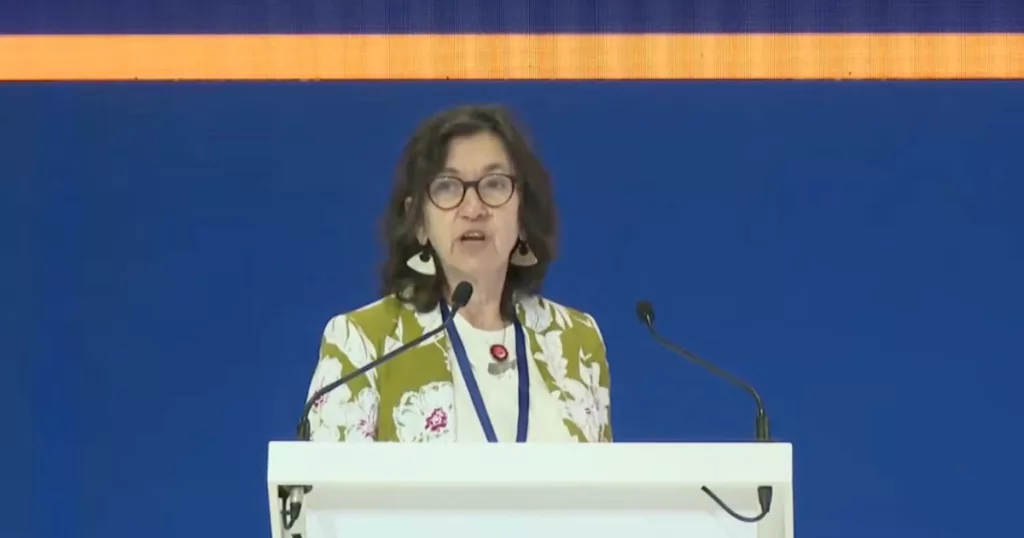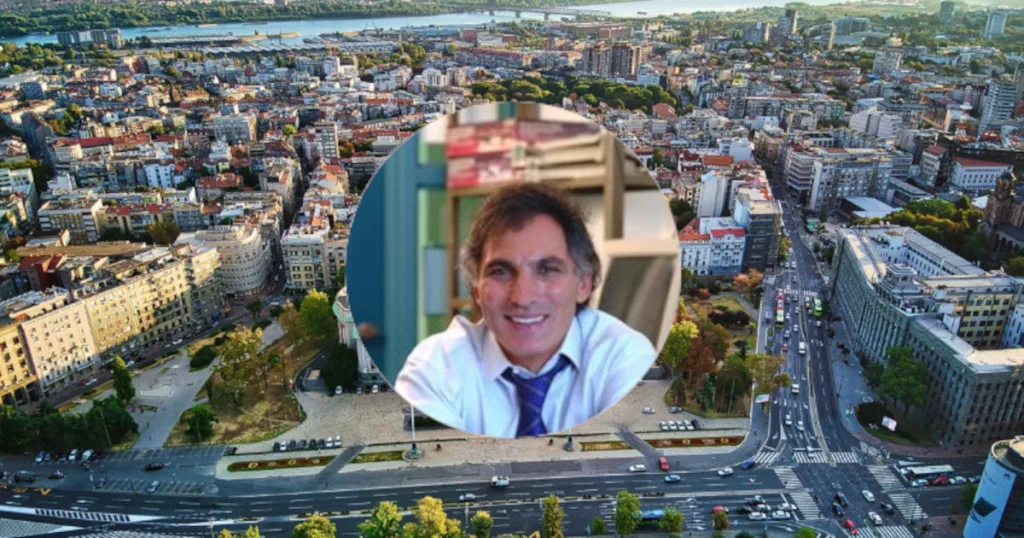
Borko Furht is a professor in the department of electrical and computer engineering and computer science at Florida Atlantic University in Boca Raton, Florida. He is also director of the National Science Foundation's Industry and University Cooperative Research Center for Advanced Knowledge Enablement at FAU.
About EHC

Borko Furht: “AI shouldn’t be given much autonomy without maintaining accountability”

Beyond Superintelligence: The Real Challenges of Keeping Humans ‘In the Loop’ Borko Furht is a professor in the department of electrical and computer engineering and computer science at Florida Atlantic University in Boca Raton, Florida. He is also director of the National Science Foundation’s Industry and University Cooperative Research Center for Advanced Knowledge Enablement at FAU. 1. Innovation and Collaborative Research Question: In your work, you emphasize the importance of collaboration between universities and industry in the development of Artificial Intelligence (AI) and data science technologies. What are the most effective models of cooperation that can accelerate innovation while ensuring ethical responsibility in AI applications? Answer: To accelerate AI innovation while maintaining ethical responsibility, the most effective cooperation models share a few core features: structured collaboration, mutual benefit, governance transparency, and societal accountability. Our model is based on the NSF Industry-University Cooperative Research Center, which I lead. Such a center provides a proven framework where industry members pool resources to fund precompetitive research driven by shared needs. Faculty and students work closely with industry scientists to develop prototypes, standards contributions, and patents. Industry partners gain early access to emerging technologies while universities retain academic freedom and publication rights. The ethical dimension is implemented via an ethics advisory board, which guide data governance, bias auditing, and societal impact assessments for all projects. Complementary approaches include AI testbeds and living labs for real-world validation, public-private consortia for standards and policy alignment, and dual-track funding models that pair technical progress with ethics research. 2. Artificial Intelligence and Transformation of Education Question: How do you envision the future of higher education under the influence of AI – can AI become a true partner in learning and research, rather than merely a tool? Answer: The potential for robots and AI to replace professors in the future is a topic of debate and speculation. It is difficult to predict the exact trajectory of technological advancements. Robots and AI have already made significant advancements in various fields, including education. There are AI-based systems that can assist in grading assignments, deliver personalized learning experiences, and provide tutoring or support for students. However, completely replacing professors with robots or AI is a complex proposition. Teaching involves more than just delivering information. Professors play crucial roles in facilitating discussions, fostering critical thinking, providing mentorship, and offering a human connection to students. Building rapport, understanding individual needs, and tailoring instructions based on students’ abilities and learning styles are areas where professors excel. Furthermore, many educational institutions value the expertise, experience, and deep understanding that professors bring to their fields. Professors often engage in research, publish scholarly work, and contribute to the intellectual discourse of their respective disciplines. Their knowledge, creativity, and ability to inspire students through personal experiences and insights are not easily replicated by robots or AI systems. That being said, technology can certainly complement and enhance the role of professors in education. It can assist in automating administrative tasks, providing data-driven insights, offering supplemental materials, or enabling remote learning. The use of AI-powered tools and platforms in education is likely to increase, but it is more probable that they will augment the role of professors rather than fully replace them. Ultimately, the future of education will depend on a careful balance between the benefits of technological advancements and the unique qualities and contributions of professors. 3. Limits of Intelligence: Can Artificial Intelligence Surpass Humanity? Questions: There is a growing concern among scientists – could AI eventually surpass human intelligence and, potentially, become a force that controls or subjugates us? What are your views on this possibility, and where do you see the boundary between human control and loss of control over AI systems? Answers: That’s an important and deeply philosophical question. I believe the real issue is not whether AI will surpass human intelligence, but whether it might one day act without human direction or moral constraint. AI already outperforms us in specific tasks – playing chess, diagnosing images, or optimizing logistics – but it lacks what makes human intelligence unique: consciousness, empathy, creativity, and ethical reasoning. The danger arises when we give these systems too much autonomy without maintaining accountability. The boundary between control and loss of control is crossed when AI systems begin making decisions beyond our understanding or oversight – when humans are no longer ”in the loop”. As we integrate AI into defense, healthcare, finance, and policymaking, that risk grows. To preserve human sovereignty, we must design AI with transparency, explainability, and built-in ethical safeguards. But equally important is the human side: cultivating a culture of responsibility, humility, and global collaboration. We may need an international framework – much like those governing nuclear or genetic research – to ensure that AI development remains aligned with human values. Ultimately, I don’t fear that machines will control us. What concerns me more is that humans might surrender control, driven by convenience or commercial pressure. The challenge before us is to ensure that AI remains a tool that amplifies human wisdom, not replaces it. In short, the real question is not whether AI will become more like humans – but whether we will remain fully human as we build it. Interview by Vesna de Vinča This interview was conducted during the World Conference on Science and Art for Sustainability, held September 22–24, 2025 in Belgrade, Serbia. SUBSCRIBE TO OUR NEWSLETTER To stay up to date with our projects and the development of the EHC Read more articles


The Serbian Academy of Sciences and Arts, in Belgrade, Serbia, hosted the World Conference on Science and Art for Sustainability on September 22–24, 2025
About EHC

The Belgrade Declaration on Science and Art for Sustainability

The Declaration was prepared as the principal outcome of the World Conference on Science and Art for Sustainability, held in Belgrade, Serbia, on September 22–24, 2025 The Serbian Academy of Sciences and Arts, in Belgrade, Serbia, hosted the World Conference on Science and Art for Sustainability on September 22–24, 2025 The World Conference On Science and Art for Sustainability (WCSAS) was hosted by the Serbian Academy of Sciences and Arts (SASA) as a flagship event within the UN-proclaimed International Decade of Sciences for Sustainable Development (IDSSD), running from 2024 to 2033. It was also the first major conference within the EHC-WAAS Program of Sciences for Sustainable Development. The Conference program comprised 12 sessions, including 42 talks, focused on analyzing the world’s existential problems—depletion of resources, climate change, inequality, conflicts, and wars—which have led the world into a deep polycrisis. The resulting Belgrade Declaration on Science and Art for Sustainability, that we publish below, and that can be dowloaded here, was prepared based on the comprehensive talks and discussions. The Declaration stresses that the global challenges are complex and interdependent, necessitating holistic, systemic, and multiple disciplinary solutions. It mandates that disciplinary knowledge be supplemented by multidisciplinary analysis, interdisciplinary syntheses, and transdisciplinary approaches, often including local traditional and indigenous knowledge systems. A core principle is the development of relations between science and art as interconnected and complementary frames of inquiry. The goal of integrating the objective rigor of science with the subjective, value-based insight of art is to achieve a comprehensive and transformative paradigm shift in global social development. The Declaration specifically underscores three critical global threats: geopolitics, climate change, and the misuse of artificial intelligence (AI). To address these, it calls for cultivating global citizenship consciousness and achieving planetary peace, defined as peace within oneself, with others, and with nature. Furthermore, institutional practices must shift from serving corporate and government interests to serving public interests. In support of these aims, EHC has planned to establish a Worldwide Grid of Transdisciplinary Hubs for Sustainability for collecting and distributing data related to global regeneration and security. You can also read the full report of WCSAS here. Belgrade Declaration on Science and Art for Sustainability The World Conference on Science and Art for Sustainability was held on September 22–24, 2025 in Belgrade, Serbia – as a flagship event within the International Decade of Sciences for Sustainable Development [a–e]. The talks and discussions spanned all disciplines of science and art, and were focused on the existential problems and challenges facing the Earth and humanity, which are: depletion of natural resources, pollution, climate change, and biodiversity loss; human inequality and inequity, autocracy, plutocracy, and corruption; intercultural conflicts and forced migrations; political and economic sanctions, color revolutions, military interventions, and wars. The Belgrade Declaration on Science and Art for Sustainability has been prepared on the basis of the talks and discussions at the Conference [f]. It comprises the following statements. 1. Complex and multiple disciplinary challenges The existential challenges the Earth and humanity are faced with in the 21st century are complex and encompass many disciplines. In contrast, the efforts of scientific and academic communities are predominantly limited to disciplinary siloes. Moreover, the dilemmas facing nature and societies at local, national, regional, and global scales are interdependent and mutually reinforce one another to a considerable degree. Therefore, holistic, systemic, and multiple disciplinary solutions are necessary. Consequently, disciplinary knowledge must often be complemented by multidisciplinary and interdisciplinary analyses and transdisciplinary syntheses. In many cases, this ambition should extend to include local traditional and indigenous knowledge systems and the results of their interactions with mainstream scientific knowledge. Three interconnected global threats to human survival and well-being, which no nation can adequately address alone, must be underscored – geopolitics, climate change, and misuse of artificial intelligence (AI). While respecting national sovereignty, the UN together with science and art institutions worldwide should work to cultivate global citizenship consciousness to foster worldwide social consensus in overcoming the destructive potential of these threats. All these problems have pulled the world into a deep polycrisis – a state of heightened global disunity with an increased momentum towards national isolationism and antagonism, conflicts, and wars. This trajectory needs to be addressed through a balanced and sustainable remediation of competing interests at all scales. Advancement of this long-term ambition should proceed on multiple pathways with polycentric leadership, i.e., it should be pluriversal. A precondition for addressing these challenges is planetary peace, understood as peace within oneself, with others, and with nature. Planetary peace seeks transformation of prevailing economic, environmental, and social systems, which includes reduction of our addiction to an outdated development paradigm based on growth of the gross domestic product (GDP) at all costs, particularly through harnessing and overexploitation of harmful and non-renewable energy sources. The state of the world in the Anthropocene requires a different approach based on the goal of security and well-being of the entire integrated system of humans embedded in the rest of nature. Such an approach holds the promise of making ours a peaceful ecological civilization. 2. Direct cooperation and integration of science and art Relations between science and art should be developed as interactions between two interconnected and complementary frames of inquiry about nature, society, and human beings. The goal is to affirm the sense of oneness of the universe and communicate the findings to others. Science and art should influence and enrich one another. Jointly, they can push farther the boundaries of a true understanding of the universe. Without art, our appreciations of the beauty of the world and the mystery of human being would be considerably diminished. A fuller integration of science and art can lead to a more complete understanding of human motivations, inspirations, and actions, offering more reliable knowledge, which can enable a comprehensive and transformative paradigm shift in global social development. 3. Specific contributions of science, art, and education Special care should be given to Big Science in establishing direct strong connections of basic sciences with engineering, medicine, and high technologies, and in

The Serbian Academy of Sciences and Arts
About EHC

World Conference on Science and Art for Sustainability

The Serbian Academy of Sciences and Arts hosts the WAAS-EHC event The Serbian Academy of Sciences and Arts The World Conference on Science and Art for Sustainability, on September 22–24, 2025 in Belgrade, Serbia, is the second conference within the EHC-WAAS Program and a flagship event within teh international Decade of Sciences for Sustainable Development. The aims of the Conference are: to listen to prominent individuals acting indifferent science and art disciplines and coming from different parts of the world, to induce fruitfulinteractions among them; and to deduce from all that some concrete conclusions on the contributions of science and art to sustainable, secure, and peaceful development to be presented to the interested policy-makers and other science and art stakeholders at the local, national, regional, and global scales. Follow the conference live from here Директан пренос SUBSCRIBE TO OUR NEWSLETTER To stay up to date with our projects and the development of the EHC Read more articles
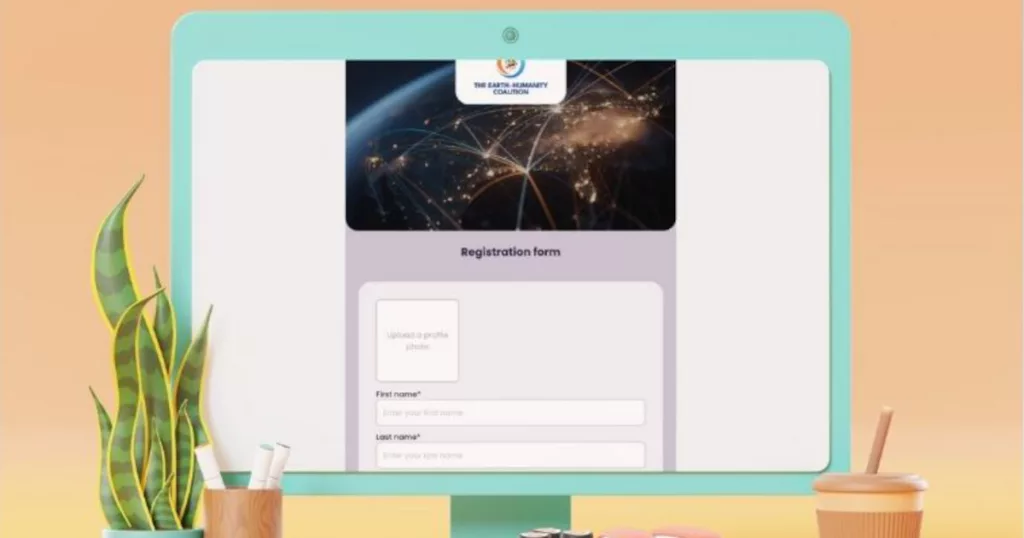
The Earth-Humanity Coalition produced communication materials and initiated projects in 2024
About EHC

Welcome 2025!

As EHC is entering its second calendar year, the last General Assembly of 2024 discussed accomplishments and projects to come, some of which are already engaged

Scroll to Top